


Olives—there’s something about them, isn’t there? How can there be so many different types, yet still, all of them taste so good? I have yet to find an olive I did not like. I got lucky this week and had many extra olives. We had planned to make another Moroccan dish (our current obsession) for dinner one night, but we never had the chance. No worries, I could do something with all those incredible little things—enter this Tartine olive Sourdough.
Before I started baking sourdough at home olive bread was always one of my favorites. I knew baking my version would go well, but I didn’t realize it would go this well. The result is just so dang tasty having it sit out on the counter is just a bad idea. One more slice, sure why not.
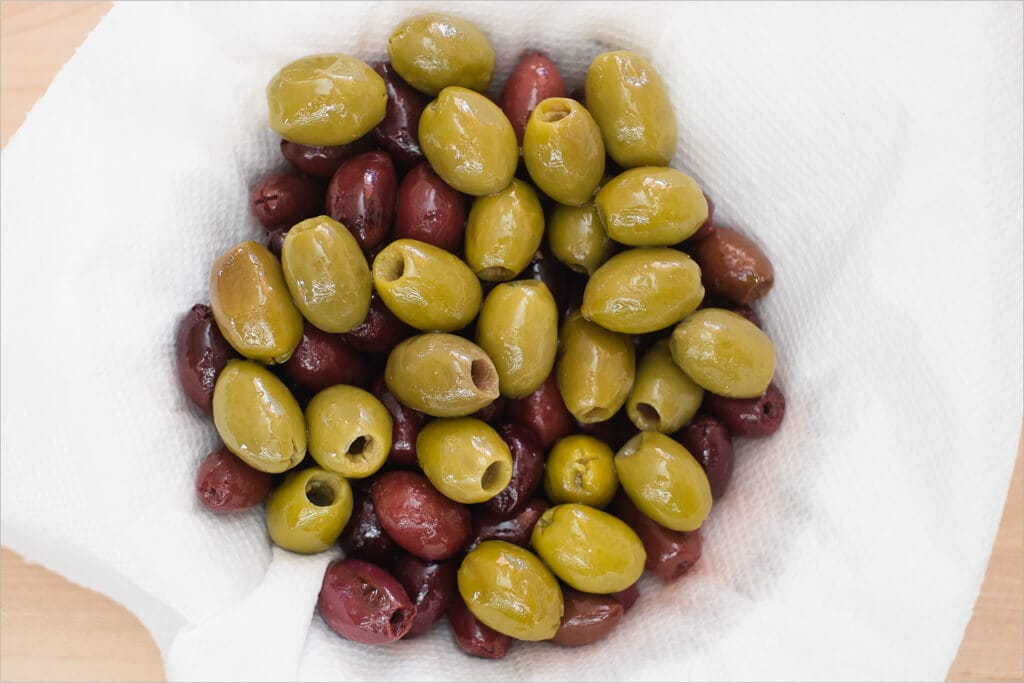
The olives I used for this were marinated in a salty garlic sauce that wasn’t what I had intended to use at the onset. The olives sure tasted good, but I think they contributed just a little bit too much flavor to the bread — just some straight pitted kalamata and Castelvetrano olives would be perfect. We recently signed up for a bi-weekly local produce box here in town, and I was pleased to find I could get organic olives in the shipment. I doubt they are local, but they don’t come drenched in spices. This will be perfect for the next iteration of this bread.
Prepare the leaven – 10:30 p.m.
My typical 100% whole wheat leaven, prepared the night before:
- 31g ripe sourdough starter
- 110g whole wheat flour
- 110g water
After mixing the above in a glass container, cover it and set it out on the counter for an overnight rest. I started with water, just a bit cooler than usual; I had some errands to take care of in the morning and needed more time to mix after waking up.
I’ve realized that water temperature is one of the most useful tools in the baker’s arsenal.
Temperatures are crucial in baking, and they are usually hard to control. The flour temperature is possible but not easy/practical, and the ambient temperature can be controlled to some level, but even a few degrees can drastically affect things. All that’s left is water temperature; this is easily modified in the microwave. Based on your schedule, mix with warmer water to speed things up or colder water to slow things down.
Mix the flour, water, olives & spices and autolyse – 9:00 a.m.
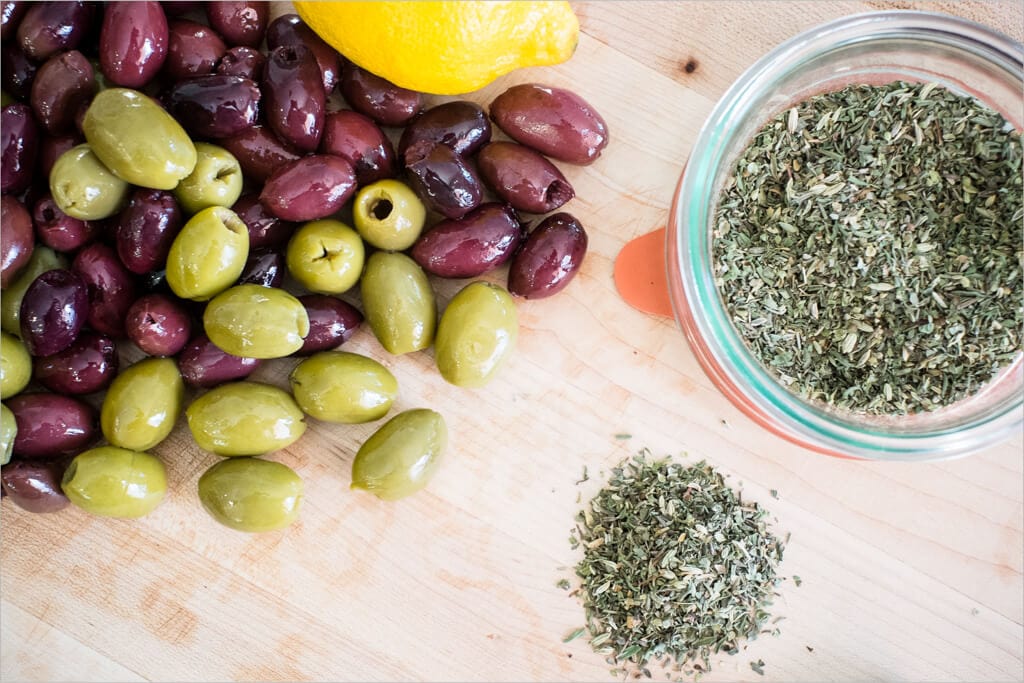
Ingredients:
- 250g (25%) leaven
- 800g (80%) white bread flour
- 200g (20%) whole wheat flour
- 20g (2%) salt
- 730g water and 50g in reserve for after you add the salt (step #5 in Method below)
- 3 cups pitted olives (I did 2 cups kalamata and 1 cup green), loosely chopped
- 2 tsp herbes de Provence
- Zest of one lemon
You might also notice that I’m pushing 78% hydration with this loaf. I’ve slowly been increasing the water amount to try and achieve a softer and more tender crumb. I’ll journal my experience with these wet doughs in a future post. It can get challenging! You could reduce the water amount by up to 5% with no problem here.
Method:
- Add the 250g of leaven to a large mixing bowl
- Pour in the 730g water & mix with your hands until the water and leaven are thoroughly mixed and dissolved
- Add 800g white flour and 200g whole wheat flour and mix with your hand until all the dry flour is incorporated
- Cover your bowl with a towel and let it autolyse for 40 minutes
- After 40 minutes, add 20g salt to the dough and slowly pour your 50g reserved water on top. Squeeze the dough with your hand to incorporate the salt
- Now reach your hand under the dough and pull one side up and over onto itself. Do this several times until you notice the consistency of the dough to turn sticky
- Transfer your dough to a large bowl for the bulk fermentation step. I usually use a clear-sided plastic container for my bulk fermentation, but adding the olives will be too much for the smaller container. Instead, I use my trusty large Heath Ceramic bowl (nice and thick for insulation).
After transferring to the large bowl, I read the final dough temperature: 75°F (24°C). Wow, it’s COLD out! This means the duration of bulk fermentation will need to be lengthened, or I will have to improvise and keep the dough warmer. In hindsight, I should have used much warmer water, maybe even up to 90°F (30°C).
For more on dough temperatures and how they affect fermentation, see my post on the Importance of Dough Temperature.
Bulk Fermentation – 9:45 a.m.
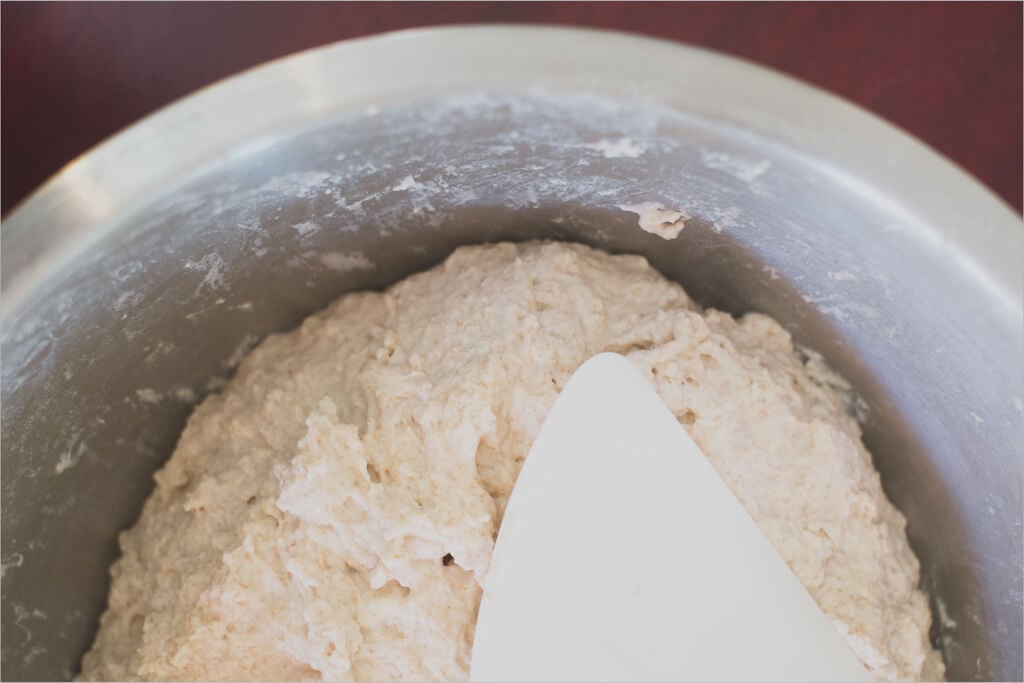
During bulk fermentation, you want to do six sets of stretch and folds spaced 30 minutes apart. The stretch and folds should be quite intense to strengthen your dough over the next several hours. After the first set, add the olives and herbs de Provence. If the mixture is overly dry after the addition, add a splash of water to help incorporate the ingredients. If you follow my recipe exactly, you might not need any extra water (because of the already high 78% hydration).
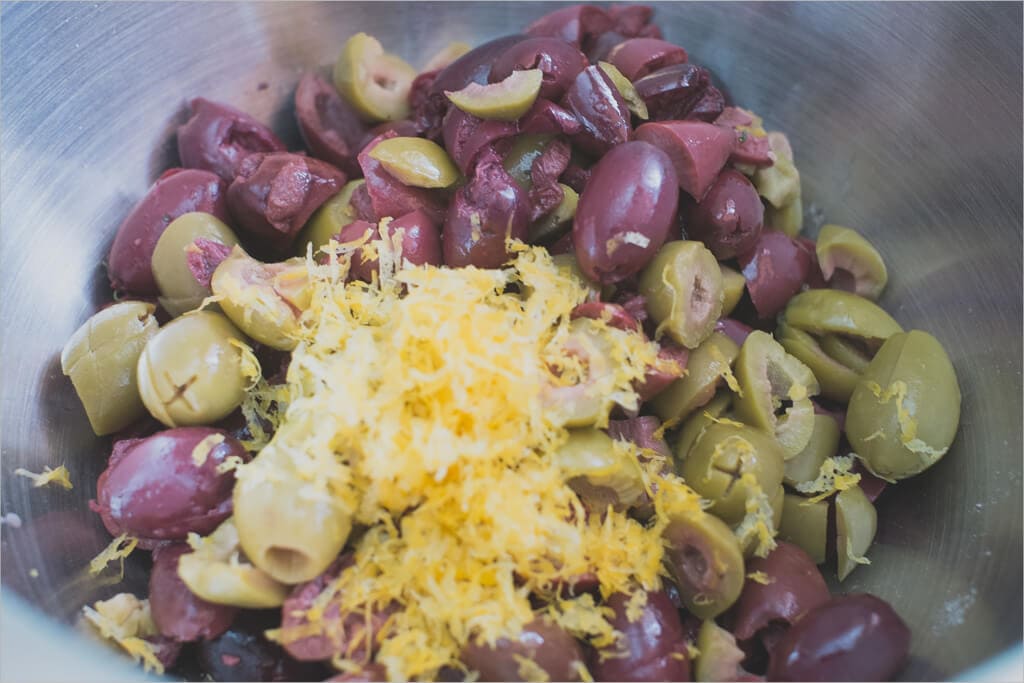
Mix the olives, herbs, and lemon zest in a medium bowl before incorporating into your dough. Set this mixture aside, and we’ll add these to the dough after the first turn; get started:
- 10:30 a.m. – Turn 1
After the first turn, add 3 cups olives, 2 teaspoons herbs de Provence, and lemon zest. Mix thoroughly with your hand, and cut the olives into the dough with your thumb and index finger.
- 11:00 a.m. – Turn 2
- 11:30 a.m. – Turn 3
- 12:00 p.m. – Turn 4
- 12:30 p.m. – Turn 5
- 1:00 p.m. – Turn 6
- 1:00 p.m. – 3:30 p.m. – Rest on counter untouched
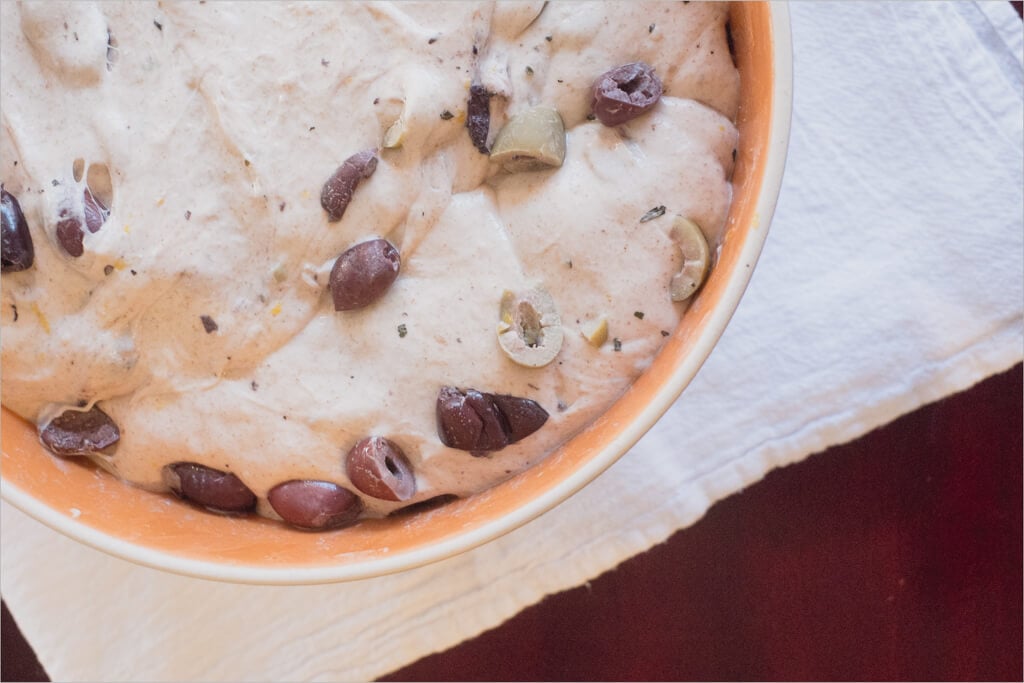
By 3:30 p.m. the dough had risen almost to the top of my bowl and was ready to be shaped. The olives dotted the dough and had me wanting to pick one or two out while shaping. It’s impossible to cook/bake good food without tasting the ingredients as you go along, right?
Pre-shape – 3:40 p.m.
Remove the dough from the container onto your unfloured work surface and sprinkle some flour on top before dividing. Divide the mass into two halves and flour the top of each half. After shaping, I inverted a bowl on top of each shaped mass to keep it from drying out and set a timer for 30 minutes.
I recently purchased another set of oblong proofing baskets so now I can do two batards instead of one batard and one boule. I much prefer the look of the batard, especially that single long score down the middle. Now that I have four baskets I can do a double batch of bread (that’s the plan for Christmas) and have all of them shaped in my favorite style.
Lightly dust your two linen-lined bowls with white rice flour. These bowls will hold our fermenting dough overnight in the fridge to proof.
Shape – 4:10 p.m.
Higher-hydration doughs such as this can be very tricky to handle. I try not to incorporate any more flour than necessary, but there is a fine line between too much flour and too sticky. Finding that balance only comes with experience.
I shaped each piece as an oblong, as seen in my guide to shaping a batard.
Proof – 4:30 p.m.
After shaping, gently place the dough into their baskets and the fridge for overnight proof. My wife keeps telling me we need either a bigger fridge or a dedicated breadproofing fridge, not enough space for food with double batches of dough! “It’s worth it,” I keep telling her. She silently agrees each time she toasts a piece of bread in the morning with her eggs.
Score + Bake – 7:30 a.m. (the next day)
Gather your tools:
I baked these loaves using the combo cooker above, but a Dutch oven also works well. See my guide to baking bread in a Dutch oven for tips and more guidance!
Preheat your oven with an empty combo cooker (or Dutch oven) inside to 500°F (260°C) for one hour.
After one hour, take one of your loaves out of the fridge and cut a piece of parchment paper to place on top of the basket containing the dough. Take your peel, then put it on top of those two and quickly invert it so the dough rests on the parchment paper and the peel.
Get your razor blade out and score the top of the loaf to allow the bread to expand while rising in the oven. I’ve been practicing more with my single long slash for the batard, and I think I’ve found my perfect angle. Place the razor 90° over the loaf and then rotate left (I’m left-handed. If you’re right-handed, rotate right) by 45° and score.
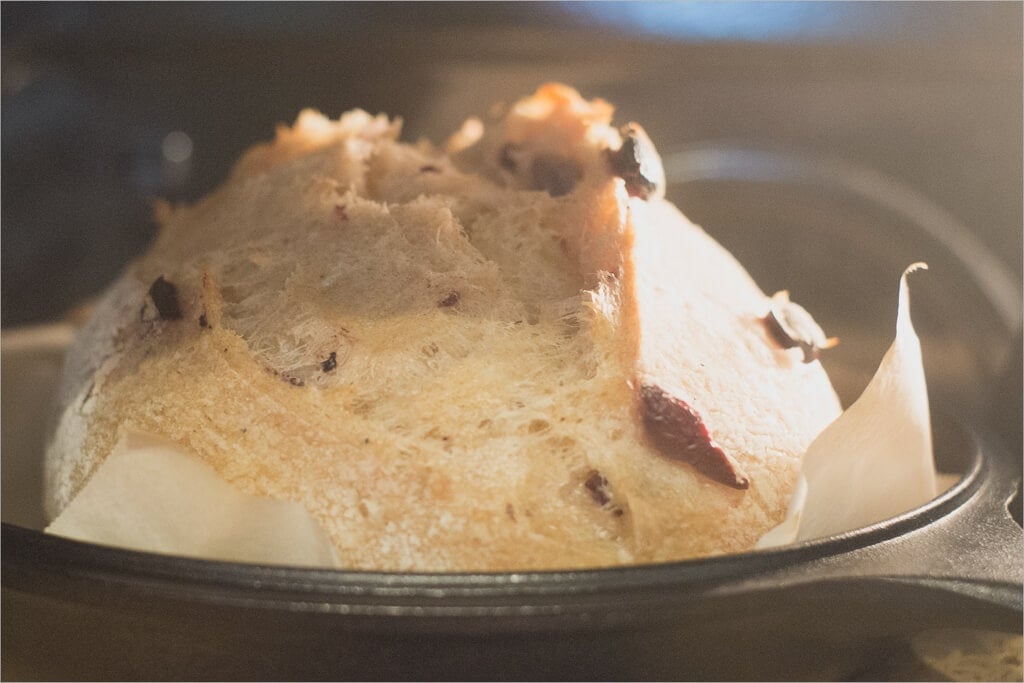
Place the dough in the combo cooker, turn the heat down to 450°F (230°C), and bake for 20 minutes. After this time, open the oven, remove the top lid of the combo cooker, close, and bake for an additional 35 minutes or until done to your liking.
Repeat for the second loaf.
Conclusion
The salty taste of the olives set this loaf off. I could hardly wait for the two loaves to cool before cutting into the first one. When you bake these, start early so you aren’t tempted at lunchtime to just cut right in and make a sandwich.
Crust
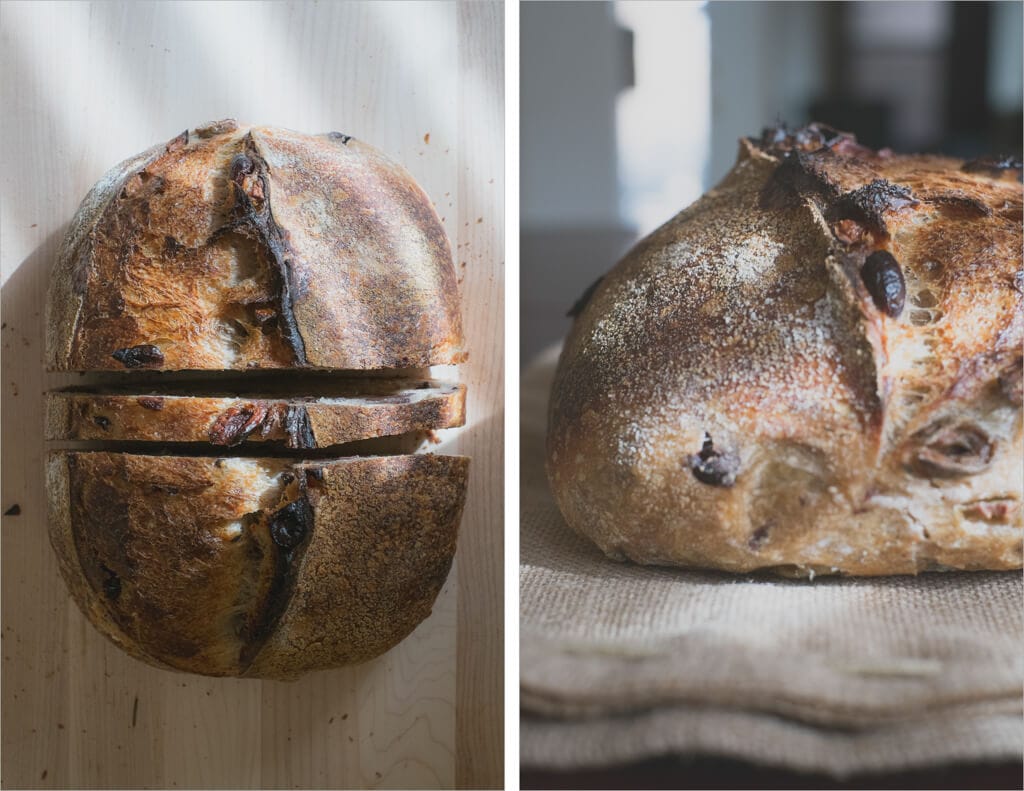
It is a beautiful crust; the color, tears, and openness are all just great. I love how the olives dot the surface of the bread, hinting at what’s inside. The crust turned out to be thin and very brittle. After a few days, it hardened a bit more, but that just added to the beautiful rustic nature of this bread.
Crumb
Soft and open, a great combination. Next time, I will try to have a more decisive yet gentle hand when shaping. Perhaps I squished out too many precious air pockets developed during bulk fermentation. Still, the crumb was very lovely.

Taste
I’ve probably already beaten this to death, but I’m serious: this bread is something. Bake it and find out. You’ll be happy you did!
If you want to try another olive-based loaf, check out my green olive and herbes de Provence sourdough bread for another winner!
If you’re a big fan of Tartine like I am, check out this Bread Baker’s Date and Banana Tea Cake made with sourdough starter discard—it’s incredibly delicious.
Buon appetito!
If you use this recipe, tag @maurizio on Instagram so I can take a look!


250 Comments
Hello Maurizio – at the beginning of this recipe you mention whole wheat bread flour. And then, when you get into the recipe, you mention simply whole wheat flour (and white flour). Help……(ingredients vs. method). Thank you in advance.
Sorry about the confusion, Amy. It's all the same whole wheat flour! Any whole wheat you have will work well in this recipe.
Perfect. And thank you for the reply. The sweet smell of figs permeates my kitchen at the moment. Fig and olive loaves are fresh out of the oven. Thank you for all the inspiration!
Hi Maurizio,
After trying your “Best Sourdough Recipe” twice with amazing results both times, I decided to give the olive sourdough a go. I believe I handled the high hydration well, and the proofing seemed to go smoothly. However, after baking, the bread didn’t rise quite as much as the previous loaves.
Could the reduced rise be due to the added olives creating a heavier mass?
Adding inclusions will always do this, Gil! Yea, you called it. I bet the flavor was worth the small sacrifice in volume, though!
Hi I made your other olive bread last week and it was spectacular! If i make this one can i refrigerate after the final fold for a long time, 36-48 hours? If yes do I continue same schedule or go right to shaping and put in the oven immediately? Thanks so much!!
You can definitely do that but the flavor will be a little more sour and a little less rise. will be great though!
What temperature should the autolyse step be at? I have a Brod and Taylor box.
I usually keep it around 74F.
This recipe produced such huge voluptuous loaves! I missed seeing that levain was whole wheat and used bread flour. Then changed up the flour mix to next day to compensate. I got a beautiful open crumb and no one is complaining about the oodles of olives. My family tends to not like a dark crust, so I only bake 20 mins covered, then 8.5 minutes on the bottom of the combo cooker and then the last 7-8 minutes directly on the rack. I still get 207 deg F interior temperature and lovely soft, stretchy crumb. I might scale the recipe down a tad next time, so the loaves fit better in the combo cooker. Or, I should use a 5.5 dutch oven.
I’m planning to start the levain tonight. What temperature is best for the levain?
I like around 74-76F.
My kids especially love this. Their mom is Lebanese and we eat it with homemade labneh.
Following up on your reply to McKean to reduce the water if dough is too slack. What about the flour? Does bread flour handle higher hydration than all purpose? How does protein content factor in?
One final question… how do you keep your bread to extend its shelf life?
Thx!
Jim
Yes, generally, higher protein flour can usually take more water. Here is how I keep bread fresh after baking!
Thank you for sharing this amazing recipe. It’s been the best bread I have baked ever!
🙂
Hi! I love this recipe, first sourdough I ever made and the one I keep coming back to. The last time I made it though it didn’t rise very much. It seemed to rise a lot during bulk fermentation but then when I baked it it just fell flat. Any ideas why this could be happening?
I also have a very hard time splitting and shaping it – its always very sticky and I’m not able to keep it in a shape (or from sticking to my hands or the cutting board). Do you think that means I am using too much water?
Last question – if I want to use more (or mostly all) wheat flour, how would you recommend changing the ratios//weights if at all?
Thanks!
McKean
It sounds like your dough is most likely over hydrated—your flour likely isn’t able to take on quite a much water, and that’s ok! Try reducing the hydration by 5% and give it another go—the reduced water should bring strength to the dough and you’ll feel it immediately. Once you find a suitable hydration, you can try to push it back up (if desired), but as you do, take note of how the consistency of the dough changes: the dough will start to slacken out as you add more and more water, this means you’ll likely have to mix more upfront or add another set or two of stretch and folds during bulk fermentation.
Generally, with an increased hydration, you need to mix longer to develop the gluten in the dough to sufficiently support the water added, but this only goes so far. At some point, the flour you’re using just isn’t able to take on any more water and you’ll essentially have a weak and slack dough. It’s always best to start conservatively and work your way up with hydration as you feel out your flour. This is typically why I recommend holding back water during mixing, adding it in as the dough handles it.
Try to keep everything else as consistent as possible and let me know how the next attempt goes!
Ok thanks so much! Going to try making it again soon for the first time in a while. I will keep you posted!
Starting this recipe tonight. Was thinking about adding some cheese. Has anyone done this and if so what type and amount would you recommend? Tia!
I’d probably do something similar to my jalapeño sourdough bread!
Thanks for posting this recipe! I have made it several times in the past, substituting all fresh Rosemary for the Herbs de Provence. I love the way the crumb is so moist, I guess from the olives. However, while the Castelvetrano olives add a beautiful color contrast to the Kalamata, they don’t seem to add nearly as much umami flavor. I made a batch over the weekend, using all Kalamata olives (3 cups, drained and patted dry), fresh Rosemary, and this time, adding Roasted Garlic (but omitting the lemon zest). I had no idea how much to garlic add – I couldn’t find any references in your other recipes – so I used five small heads, which produced about 100g of peeled, gooey, caramelized Roasted Garlic. The final product was quite different than the regular recipe – much more bold and pungent, good but not great. A bit overwhelming, actually. I guess adding too many strong flavors can overwhelm the palate, or I didn’t get the amounts of the additions right.
Have you ever used roasted garlic in sourdough?
You’re very welcome, Lynn! Yes, kalamatas bring a ton of savoriness to this loaf, they’re definitely special. I haven’t tried roasted garlic, but if I did, I would (as you probably thought to do next) use it as the only ingredient in the loaf—garlic brings a wallop of flavor & aroma! It’s something I’ve wanted to play with for a future loaf but haven’t had a chance just yet 🙂
I wonder, maybe someone asked before, Tartine recipe is one of the very few that mix levain and water for the autolyse, I made research, have not much answers, what’s the difference, any one saw difference in the bread, leaving or no levain in autolyse? Thank you.
.
You can go either way, just know that adding your levain at the start of the autolyse will mean fermentation begins at that time. Take that time into account into the total fermentation time of your dough!
Wondering how I might adapt this to bake the same day as making the dough (i.e., no overnight fridge proof)? Any suggestions how long to let it sit on the counter after shaping/before baking if I want it tonight? As anyone who has tried this recipe knows, it’s hard to wait for this delicious loaf!!
I made it today in one day. I started at 7:30. Bulk fermentation until 1:30. Let it proof on the counter for about 2 hours and baked it at 3:45. It was PERFECT!
HI Maurizio,
First off, thanks for this amazing website. I have been baking with you for the last year and really can’t thank you enough for making baking so accessible and consistent. I started with your sourdough and have been expanding to others and now the olive bread. The first time I made it, the loaves turned our really well. Nice rise and good crumb. The dough was a bit wet as you mention, but manageable. The second time, I made 4 loaves and the dough really increased in size during cold proof, to the point of coming over the sides of the proofing baskets. Lots of air bubbles as well. When I baked at 450 degrees I did not get the rise or the separation of the score marks that I usually see. Normally, I see big spaces where I score the surface. The loafs seemed dense and a bit moist inside when I cut into it. The only difference between the two sessions was that I cold proofed the second session a bit longer, around 24 hours vs. the usual 15 to 16 hours. Did I over proof the second batch? Thanks Jim
You’re very welcome James, glad I could help! Yes, sounds like over proofing to me, sorry about that! It happens to us all. It sounds like it had too much fermentation time and thus the increased rise and bubbles (the dough will weaken the longer it ferments, and could show signs of this happening).
Happens to us all, believe me 🙂
Just made this recipe a few days ago. It was beautiful dough, but wow it is wet! I also found that it rose way more than I expected just during the six stretch and folds. I didn’t even wait the two hours after those were completed. I didn’t see an amount to let it rise in the recipe, but got worried when it just kept growing! It even rose quite a bit in the fridge. Must have been my starter? It is summer, but I have A/C so it wasn’t that warm. I’m not sure why it was so active. I got worried I overproofed it, and I will say it didn’t have a great rise in the oven, but it wasn’t the disaster I assumed it would be. Shaping was difficult. It did taste amazing. I just wish I knew what I should change for next time. Thanks for the recipe!
Hey, Lori! I’d say try dropping the water in the recipe a bit next time—perhaps 25 to 50g—and see how the dough feels. It should be stronger and much more manageable!
This looks wonderful and I want to try it as my first Olive Sourdough. Is there a way to print the recipe only, with your step by step directions without the pictures. It’s 24 pages to print as is. Maybe I’m just tired and missing something. Thanks!
Hey, Bernadette! I’m working on updating this post with a print function, sorry about that! Many of my other recipes here have it, but I haven’t updated this one quite yet. I’ll get to it soon!
I made this bread today although I adapted the quantiities and the flour. I used King Arthur Bread flour and semolina 60%-35% and 5% of Rye flour. I was in the mood of experimenting. I added olive oil to the dough and 80% water.
As well as olives I added a few sundried tomatoes and rosemary. The result was a fabulous bread, I had 4 friends for dinner and the bread was gone before I knew it.
I will make another and much bigger loaf tomorrow!
Really glad to hear that, Maribel!
Hi Maurizio! Do you rinse and dry the olives before mixing them into the dough? Or do you simply use them right out of the jar? Thanks 🙂
Yes, definitely rinse, Olga! Rinse and let dry.
Hi Maurizio,
Do you have trouble with your olives sinking? Any advice how to avoid this? Thanks!
Olivia—I just recently made this, no problems over here! I’ve never seen that happen given how strong the dough is…
I’ll give it another shot and see if it was just a one off. Thanks!
I’ll give it another shot and see if it was just a one off. Thanks!
I’m so disappointed to find that the helpful videos on this page have been replaced by ads. Is there any way to get them back? Or another website that has them intact?
As a sourdough beginner, I had failed and given up. But the “Eureka!” moment was when I saw your descriptions accompanied by the videos. It was the clearest presentation I had seen and gave me a good idea of what to expect in the dough handling. After seeing these, I have now made many different recipes reliably.
Thanks for giving me the information I needed. Can you bring back the videos??
Hey there! No videos have been removed from my site. I think you might be confusing this recipe with my beginner sourdough recipe with all-purpose flour, which has several videos throughout the baking process.
Additionally, check out my beginner bread baking recipe section for more.
Hope that helps!
Hi Maurizio-I had a couple questions (fellow Burqueño here) as I’ve never tried this recipe before. I notice somewhat of an evolution in your recipes and wondered if you ever adapt these older ones to your newer techniques. For instance, I notice that your newer recipes tend to have the levain start in the morning of day 1 instead of going overnight. I also see that in this recipe you include the levain in the autolyse, but more recently you seem to prefer adding the levain with the mix after autolyse. Does that essentially just allow the levain to ripen in parallel during the autolyse without having to start the night before? Would that work with this recipe too?
Hey, Dough! How’s this warm sunny weather today in ABQ? I’m into it! I do go back and update these posts, but i haven’t yet made it back to this one yet (soon!). I do like to do an overnight levain as well, it all depends on the recipe. I’d say about 99% of the time I do not have the levain mixed into the autolyse, it’s rare for me to do so. The moment you add the levain to the dough fermentation begins, so if you’re doing a long autolyse with levain, you might over ferment the dough if you don’t factor that in. Hope that answers your question!
Hi Maurizio! Thanks for the awesome recipe 🙂 I am having trouble getting good oven spring with it… When I take it out of the proofing basket to score and stick in the dutch oven, the dough relaxes a lot and doesn’t seem to hold its shape, which I feel may be contributing. Any advice here?
Hi Maurizio! I’ve been using a recipe that does not require leaven, but rather using the starter straight from the fridge, and I really like working with that recipe. Is it possible to sub the fridge starter for the leaven in this recipe? how does that generally impact the final result? thanks!
Oh one more question about the olives… This is an old post so perhaps that’s why you used volumetric measurement rather than weight. If you had to convert from cups to grams (more precise) for the olives (presuming they have been drained and pat dried with paper towels), what would you suggest?
Hi Maurizio, I’ve made this recipe once before, but I used 20% inoculation instead of 25% (because I had already made the leaven for 1KG flour for plain loaves, and changed my mind when it was time for autolyse). I also used 10% Dark Rye, in addition to the 20% whole wheat, so it was actually 30% whole grain. The two loaves were some of the best I’ve ever made, if not thee best. I will say that the kalamata olives add much more flavor than the rather plain Castelvetrano, but I do like the combination, for complementing colors and flavors.
I’ll be making an Olive loaf again today (just one this time), and I prepared levain for 25% inoculation. However, I’m curious why you increased it to 25% for this recipe?
I have a question. I’ve made this recipe many times with loads of success! It’s been a few months since I’ve baked and I ran out of time last night fermenting my dough. After the 6th fold I threw it in the fridge for 5.5 hours to sleep. I just woke up and pulled the dough out to bring it to room temp. Once the dough is at room temp should I let it sit for 2.4 hrs like you do after the 6th fold or does it need to be less time?
Hey, Melanie! If the dough didn’t have enough time the day before, yes, you’d need to give it more time the next day to finish fermenting. If you put it in the fridge in bulk (before dividing and shaping), then you could take it out, prehsape and let it rest for 30m, then shape and proof on the counter in a basket (covered) until ready.
Hi! If going this route, do you know about how long it may take to proof in basket if room temp is around 72F? Thank you!
Yes, that would be ideal!
Hi Maurizio! I’ve been going through all your recipes with great success! I’d like to make this one again but I want to add greek Yogurt and lemon zest and some fresh thyme. Can you recommend how I should add the yogurt? Should I substitute it for some of the water, or how much should I add? Also, when in the process do you think is the best time to add it? Thank you! I love your site and your recipes!!
Glad to hear that! I’ve never added yogurt to my dough, but I’d start conservative and work up. Maybe start at 10% to total flour weight and see how that goes. Yes, I’d remove equal parts water for the yogurt. If the dough feels a little firm after doing so, add a little water until you get to the right consistency. I’d add the yogurt from the start. The thyme and lemon zest shouldn’t be a problem adding at any point. Have fun!
Thank you!
This recipe should come with a warning! Warning: you may eat the whole loaf in 1.5 hours. SO GOOD! The saltiness of the olives work perfectly with the sourdough. I didn’t use the herbs mentioned just the kalamta olives and some lemon zest. I’m already feeding my starter and stocking up on olives for round 2…
I cant tell you how many times I’ve made this bread and keep telling myself I should take a bread… And yet I don’t 🙂 Enjoy!
Hi Maurizio, Is it 50g of water plus the 730g or do you substract them and keep them aside? Thanks as always.
As the commenter said below, it’s 730g + 50g for a total water of 780g. But as always, be sure to adjust the hydration to suit your flour, the 50g water in reserve is to help with this—only use it if it feels like the dough can handle it.
HI Fadia- I’ve made this recipe several times. Per the above directions, “730g water and 50g in reserve for after you add the salt”, the water is 730g + 50g.
Awesome find.
The olive loaf i was looking for!!
You are awesome!!
Happy to help, Michele!
Quick question about timing. I want to make the recipe, I can do the levain the night before, but won’t have time to get to the Bulk Fermentation steps until maybe 11:30 – noon the next day. Would that be ok to keep the autolyse step for more than 40 min or would it be best to just start the second step a couple of hours later and let the levain sit the extra hours?
Given the two, I’d autolyse for longer.
I just finished baking the first loaf of the Tartine Olive recipe. I followed the baking guidelines and used a Lodge Combo cooker for 25 minutes with the lid on. Then continued for 20 minutes with the lid off. The bread is very dark and the exposed olives are nearly carbonized. I’m glad I checked it early – the recipe calls for 45 minutes with the lid off. It smells and looks incredible and am painstakingly waiting an hour to cut into it! Just wondering if anyone else has experienced a similar result? The next loaf, I’ll check even sooner.
Thanks for the great site and the recipes!
As is always the case, adjust the baking time to suit your oven and environment! It does sound like you need less baking time (if you live at sea level or your oven runs a little hot, this most likely the case).
Thanks! I’ve made this loaf twice since then and now use 20 min with combo cooker lid on, then 20 min with lid off. The loaves have been fantastic!
Right on! Super happy to hear that. Happy baking 🙂
Hi Thanks for the detailed recipe!! Would it be ok to use all purpose flour (instead of bread flour) with this recipe?
Yes you could! I’d likely hold back some of the mixing water with that flour change. Hold back 50g or so, add it in if it feels like the dough can handle it during mixing.
thanks!!!! i will give it a try! thanks for your helpful website for sourdough bread baking! really inspiring and love the details in your description!