


In winter, one of my favorite beverages has to be stout. That dark, malty, and filling beer takes the edge off the cold outside. Early in the week, I went to my local brewery, La Cumbre, here in Albuquerque and picked up a growler of their exceptional Malpais Stout to drink throughout the week. Somehow, by the end of the week, I still had a bit of the growler left and decided to incorporate it into my weekend sourdough in one way or another. With the success (I think so, at least) of last week’s Tartine Sesame Country Sourdough, I thought, why not? Beer and bread go together, don’t they?
I didn’t have a recipe to follow for this, so I just did what I thought made sense. My method here was to replace a quantity of water when mixing with the stout. I’ll tell you wholeheartedly that adding the stout made the dough smell like it was from heaven.
Though, how could it not? The sugars in the beer could only be a good thing for this stout country sourdough.
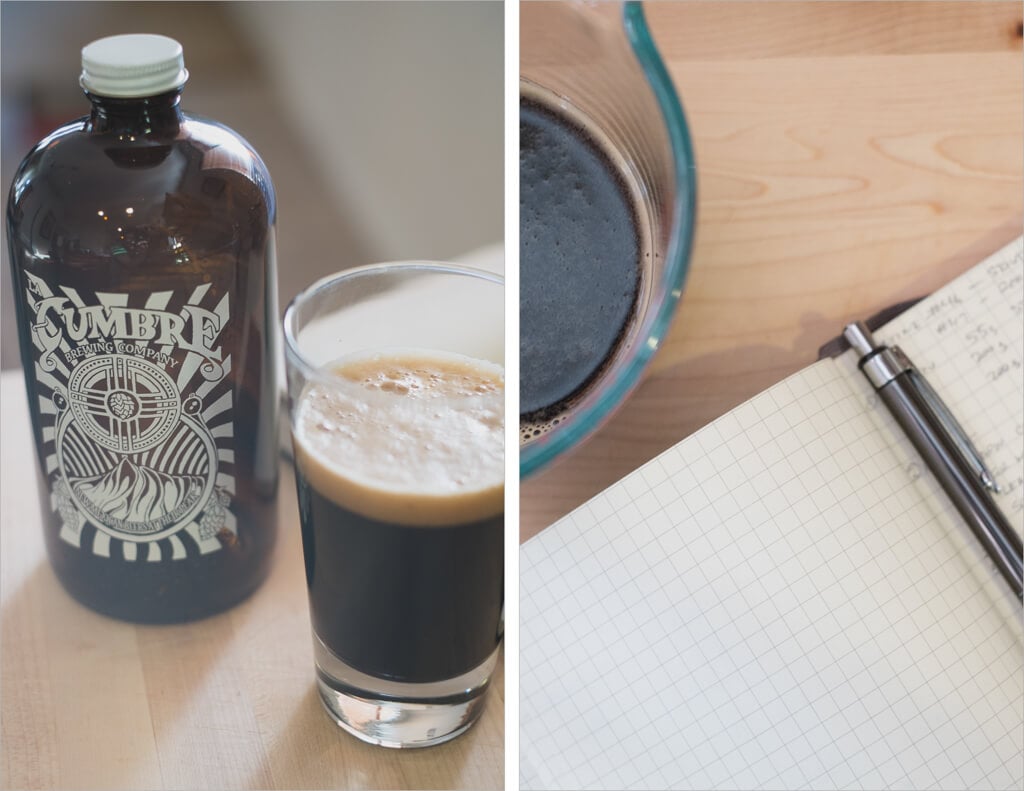
Since I had a bit of time for this weekend’s bake I decided to do a double batch of sourdough: 4 loaves. One batch was the Stout Country Sourdough and the other was my typical Tartine Country Sourdough. This is probably the first time I’ve done 4 loaves of bread at the same time and boy, that’s a lot of work. I definitely appreciate how challenging each day must be for a professional baker.
For this journal entry, I will just outline what I did for the stout country sourdough loaves. The other pair is essentially my usual method for sourdough. If you’re new to baking or want to start with a great introductory sourdough, check out my recipe for a Beginner’s Sourdough Bread—it’s delicious without any mix-ins!
Stout Country Sourdough
Prepare the leaven – 10:00pm
Friday night I prepared a 100% whole wheat leaven with the following ingredients:
- 34g ripe sourdough starter
- 125g whole wheat flour
- 125g water
After mixing the above in a glass container, cover and set out on the counter for an overnight rest. If you start reaching for that stout… put it down.
Mix the flour and water, autolyse – 7:45am
Luckily Friday night I stopped myself from having a glass of the remaining stout in my growler, as tempting as it might have been. Grab your early morning espresso and your ingredients and let’s get ready to rock this bake.
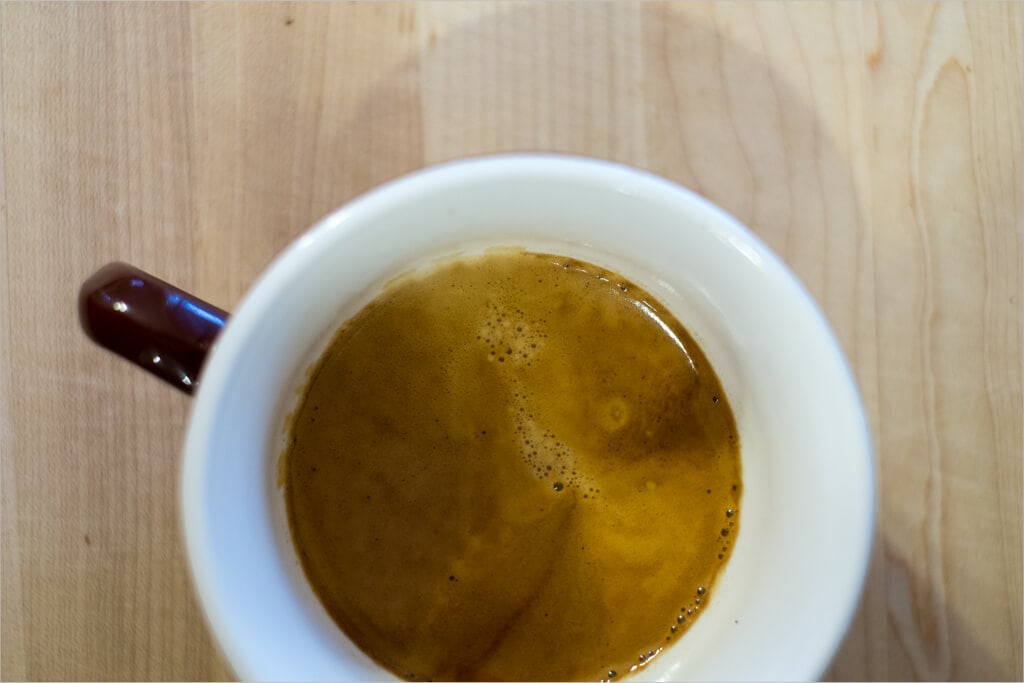
Ingredients:
- 250g (25%) of your new leaven
- 800g (80%) white bread flour
- 200g (20%) whole wheat bread flour
- 20g (2%) fine sea salt
- 200g La Cumbre Malpais stout beer (20%)
- 510g and 50g water (56%) in reserve for the next step
Method:
- Add the 250g of leaven to a large mixing bowl
- Pour in 510g warm water and mix with your hands until the water and leaven are completely mixed & dissolved
- Pour in 200g of stout
- Add 800g white flour and 200g whole wheat flour and mix with your hand until all the dry flour is incorporated
- Cover your bowl with a towel and let autolyse for 40 minutes
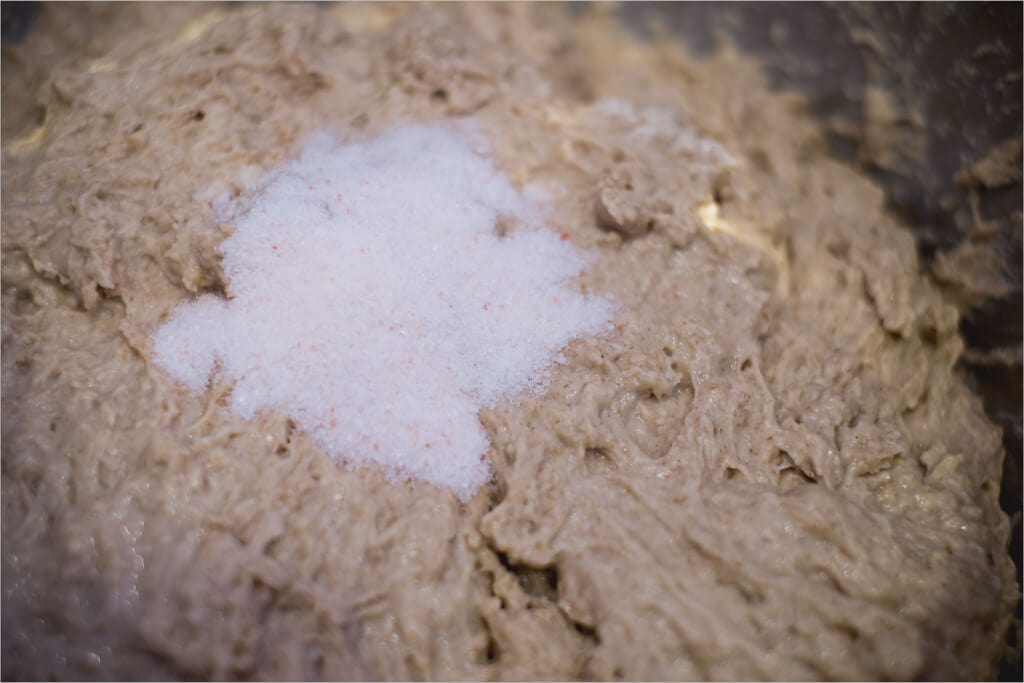
- After 40 minutes add 20g salt to the dough and slowly pour your reserved water on top. Squeeze the dough with your hand to incorporate the salt
- Now reach your hand under the dough and pull one side up and over onto itself. Do this several times until you notice the consistency of the dough to turn sticky
- Transfer your dough to a large bowl for the bulk fermentation step
Don’t forget to take the temperature of your dough at this point. It should read around 78°F (25°C). Mine came in just shy at 77°F (24°C), and that tells me it might mean a bit longer during bulk fermentation (see my post on the importance of dough temperature in baking).
Bulk Fermentation – 8:50am
During bulk fermentation you want to do 7 turns spaced out 30 minutes apart. The turns should be quite intense to strengthen your dough over the next several hours.
- 9:20am – Turn 1
- 9:50am – Turn 2
- 10:20am – Turn 3
- 10:50am – Turn 4
- 11:20am – Turn 5
- 11:50am – Turn 6
- 12:20pm – Turn 7
- 12:20pm – 2:20pm – Rest on counter untouched
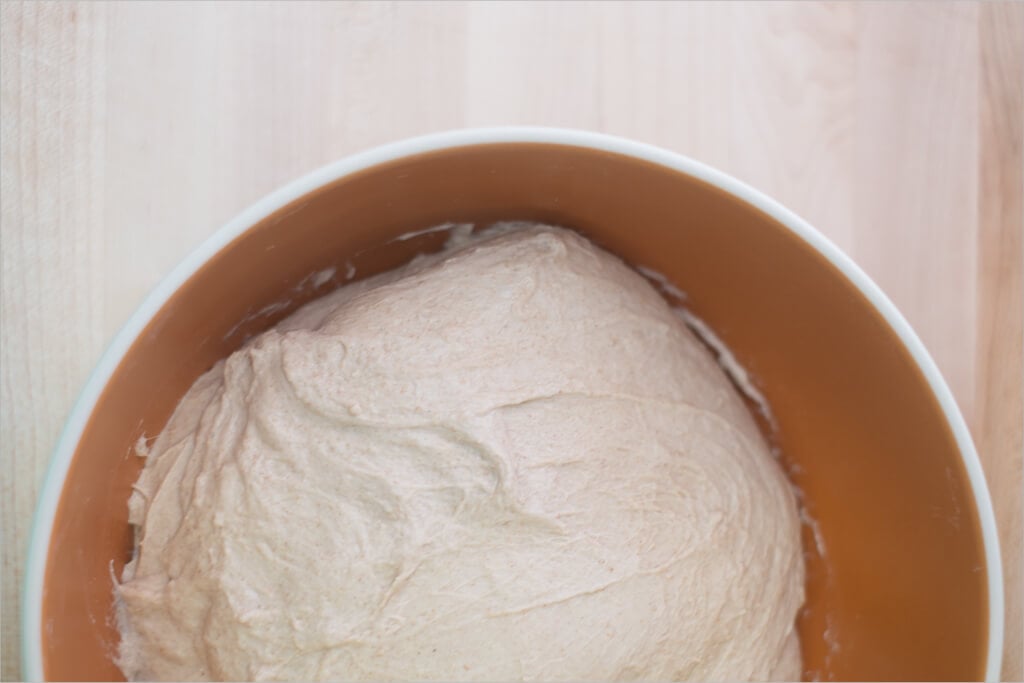
At 2:20 p.m., the dough in my bowl had risen at least 30%, and there were little air pockets throughout, even some bubbles on top. It smelled incredible at this point, and I really wanted to start the bake right then and there.
Stretch your arms and hands and get ready to do your shaping.
Pre-shape – 2:30pm
Remove the dough from the container onto your unfloured work surface and sprinkle some flour on top before dividing. Divide the mass into two halves and flour the top of each half. I continued using one half for a longer oblong batard and the other for a boule. I ordered several more oblong bannetons for future bakes as I enjoy the batard shaping process and much prefer the result. In a future post, I’ll talk about my shaping and even show some experiments I’ve performed on the different shapes and how they affect rise, crust thickness, etc.
After shaping I inverted a bowl on top of each shaped mass to keep it from drying out and set a timer for 35 minutes.
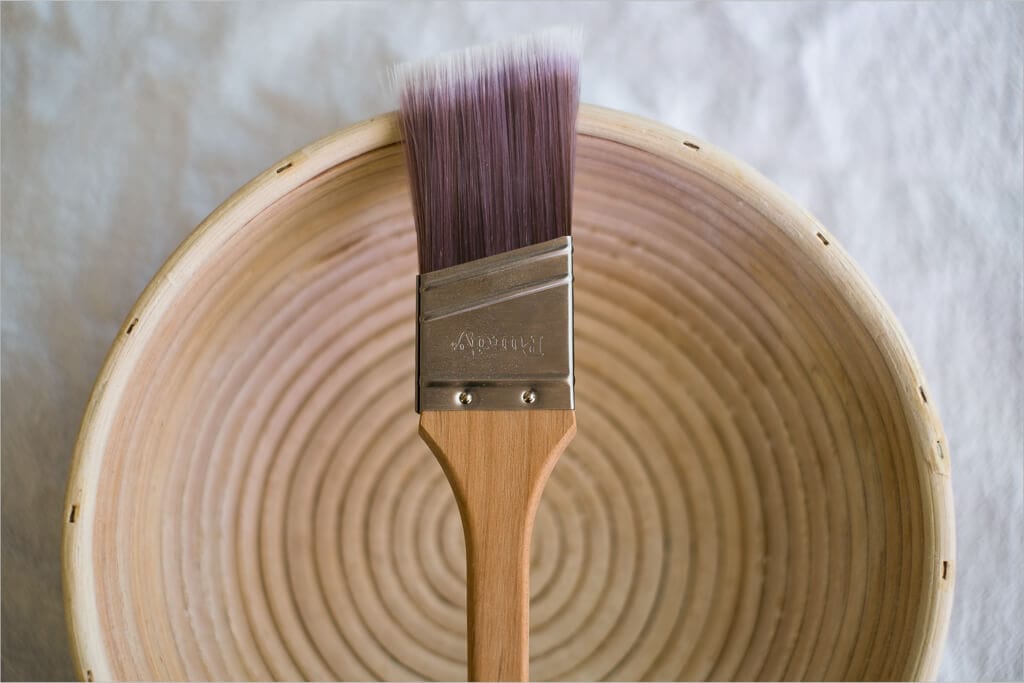
Lightly dust your two linen-lined bowls with white rice flour. These bowls will hold our fermenting dough overnight in the fridge to proof.
Shape – 3:05pm
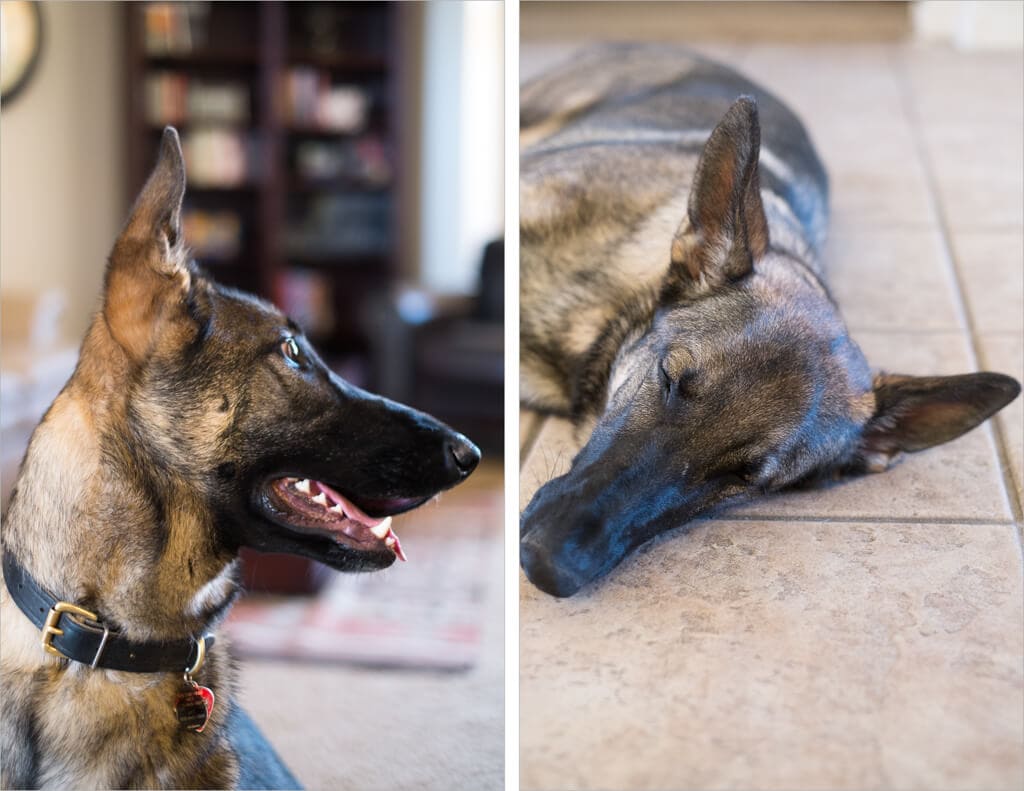
By 3:00 p.m., the dog was ready to go out and explore, run, and harass all the rabbits near my house. She pretty much sleeps all morning, and then by the later afternoon, if she doesn’t stretch her legs, it’s going to be a long night for us. After this shape, she’ll get her chance to hopefully catch a rabbit (it has yet to happen).
For this dough, I shaped one of the loaves as a batard shape (following my batard shaping guide), and one as a boule shape (following my boule shaping guide).
Proof – 4:15pm
After they have been shaped, they are placed into their respective baskets and the fridge for a long overnight proof.
Speaking of which, one of you readers recently asked me if I felt the long cold proof added flavor to the resulting bread. The short answer is yes! The long proof really gives your fermenting dough a chance to build up a very subtle, complex sour flavor that you just cannot duplicate with a short, warm proof—at least I haven’t been able to duplicate it.
Score + Bake – 12:00pm (the next day)
Well, I can confirm Arya (our dog) got really close this time to snagging one of the 4 legged friends near our house, but still no dice. Next time I have got to bring my camera out there on our long walk through the desert to catch a few action shots of her bounding from bush to bush. But I digress, let’s get these loaves into the oven.
I had a little bit of a late start on Sunday morning. I had a brunch outing with some friends (hazelnut French toast and Intelligentsia Coffee cannot be refused), and so the bread had to wait. If you do the math, this means my dough rested for 20 hours! That’s a long proof.
Gather your tools:
Preheat your oven to 450°F (230°C). See my post on baking in a Dutch oven (or combo cooker) for more discussion on the following baking process.
After one hour, take one of your loaves out of the fridge and cut a piece of parchment paper to place on top of the basket containing the dough. Take your peel and then put it on top of those two, quickly inverting it so the dough is now resting on the parchment paper and the peel.
Get your razor blade out and score the top of the loaf to allow the bread to expand while rising in the oven. For the larger batard, I did a single slash down the middle, starting from the top to the bottom. I did my typical “X” score for the boule, which was centered right on top.
Place the dough into the combo cooker, cover with the lid, and bake for 20 minutes. After this time, uncover the Dutch oven (place the top next to the base with the baking dough) and bake for 35 minutes. When finished baking, remove the loaf from the pan and let cool on a wire rack.
Repeat for the second loaf.
Conclusion
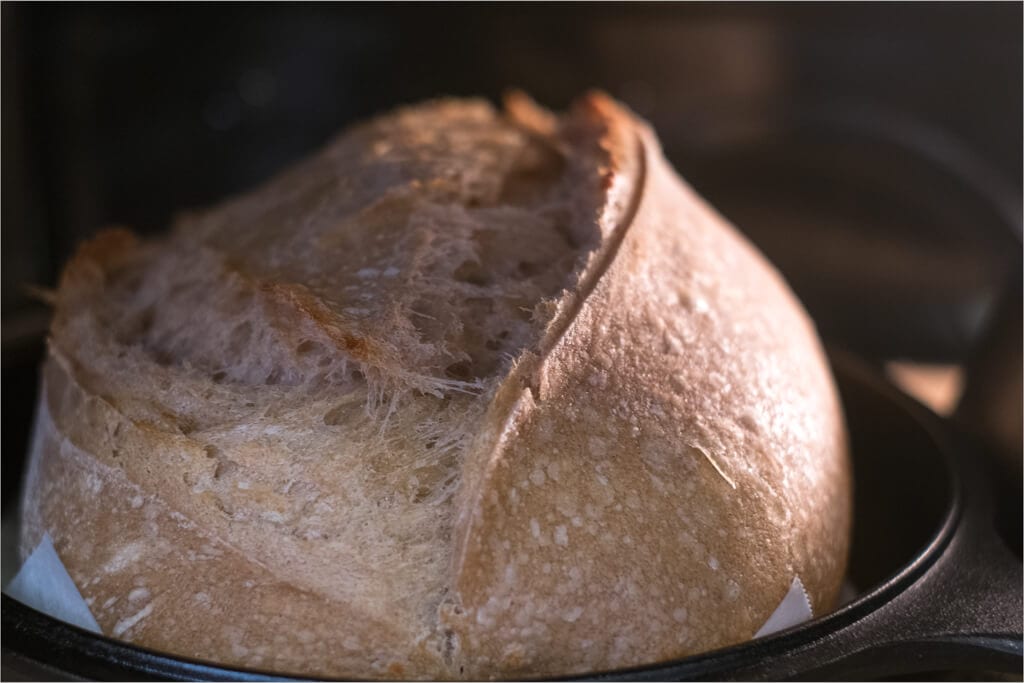
Look at the rise in that beauty! Wow, excellent oven spring. All four of the loaves of this stout country sourdough had excellent oven spring. I love popping off that top and seeing the dynamic tearing and shifting so visible in the crust.
Crust: You can’t beat those three adjectives: Nice and crackly, thin and crunchy. The caramelized outside has lovely colors, so you know it’s going to be tasty. A thin crust can be challenging to attain, but it is possible!
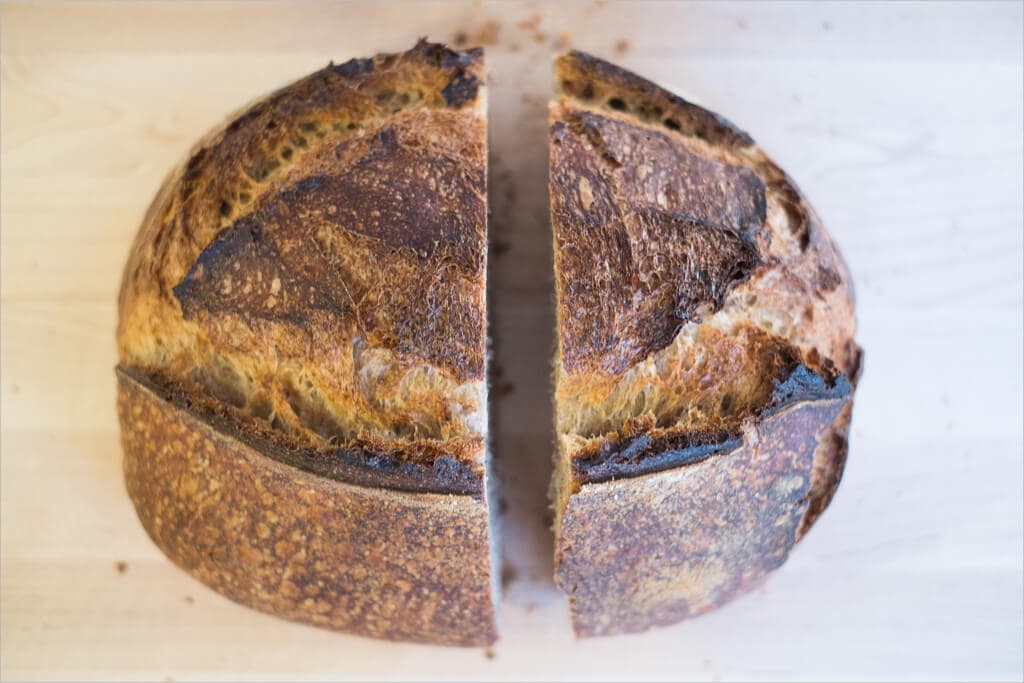
Crumb: The relatively airy crumb could have been a bit more open. I’m unsure what caused the denser crumb on the stout loaf. It could simply be that I over-shaped the dough, knocking out built-up gasses, or it could be that my flour has a bit lower protein than what I normally use.
For this bake, I used what’s more closely related to an “all-purpose” white flour instead of a “bread flour.” You can also see that even though I used 800g white flour here, the dark malty stout imparted a dark coloration on the inside of the loaf. Almost looks like it’s more whole wheat than white.
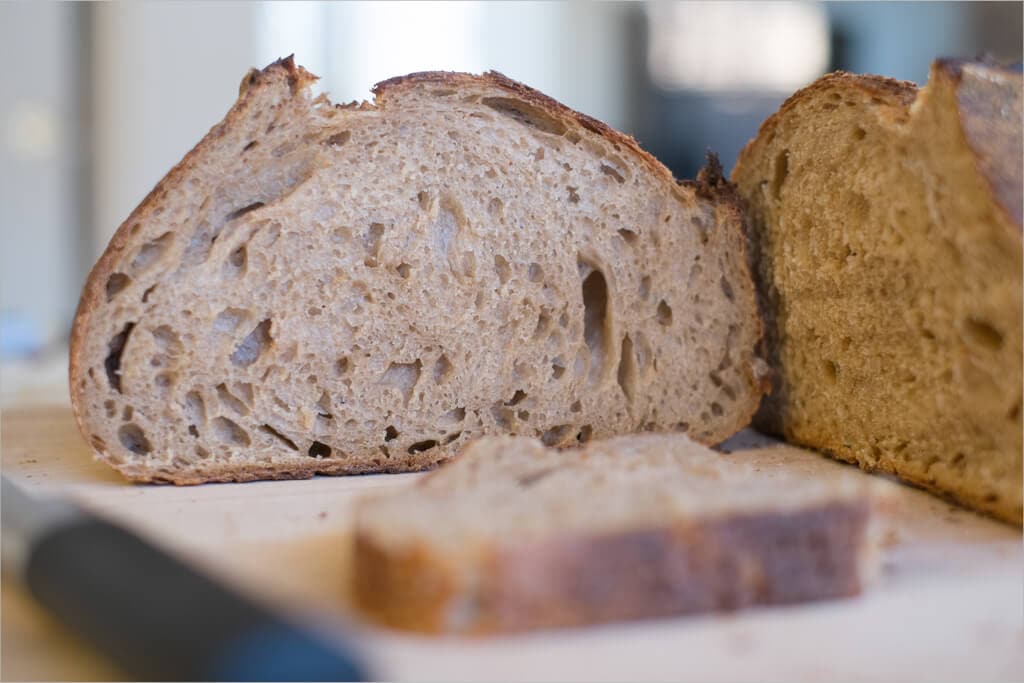
Taste: Well, the taste was pretty darn good! I’d say the beer made the crumb a bit more chewy than usual, which can be good or bad, depending on your tastes. But the subtle malty flavor was a very welcome addition.
And for my essential note: I think I’ll add more than 200g of stout next time. I’m thinking of removing 300g of water and adding 500g of stout to impart even more malty flavor to the loaf. If we’re going to make beer bread, we should go out.
What’s Next?
Looking for more beer-related bread? Check out my Hop Miche, a large French-style loaf made with a dark Russian Imperial Stout—it has a stellar crust and flavor!
Buon appetito!
If you use this recipe, tag @maurizio on Instagram so I can take a look!


55 Comments
This is my 4th or 5th time making this fabulous bread! I have consistently made it with 500g of imperial Russian stout and the flavor is excellent but otherwise follow your recipe exactly. I do bake the loaves on my steel with a Brod & Taylor Hood vs. a Dutch oven and get a great rise.
Thanks for all the incredible recipes and guidance! https://uploads.disquscdn.com/images/af240025eaebb8ec5e8d0560ca8e9321ae1b0017eb38e248eb0c0847ed8a67d4.jpg
Really love your recipes – so well detailed and explained… yielding delicious outcomes 😋
Can you help me understand why the timing of the shaping is so long until proofing starts – 3:05 – 4:15PM?
if I read the recipe right the pre shape and bench rest would be done prior from 2:30 – 3:05 PM
Thank you so much for clearing the flour dust from my brain 🫤
I developed my own recipe for beer bread several years ago, and use Guiness Stout in mine. I first tried a lighter beer (Stella Artois), and the result was practically no beer flavor at all. I sub out all of the water for stout, excepting that in the starter of course. The bread has a definitive beer aroma and flavor without any bitterness. Sometimes I add sharp cheddar to the dough as well. The dough is definitely a stickier texture than when made with water, and the crumb is always more closed. I think that's just the nature of beer bread. I love reading about all your experiments and I've definitely learned a lot from you!
Forgot to buy stout so I made this with water. Turned out great, lol. Next time I'll try it with beer.
Thank you! This is one of the most delicious loafs I've ever made. I adapted your guidelines to my local flours and stout and used my basic starter instead of the ww levain. I only needed to do 5 sets, the dough mixed beautifully and held shape very well. It was actually a joy to work with it and such a pleasure to smell it in anticipation of the bake. I wish I could share a picture here, it's gorgeous! I'll definitely play with the amount of stout next time and do the levain as well. This is a keeper.
I used 500g of dark beer and it worked. The flavor was deep and had a good rise. Its a keeper!
Sounds delish!
Well this was an amazingly fun dough to make! I ended up using a full tall boy of Forged stout, ~434 g poured, subbing the extra 234 from the the water (ended up using about ~270g water, probably could have added more but I’m always on the cautious side with hydration during a first attempt at a new recipe). I also added 100g of grated smoked cheddar after hearing about an amazing beer:smoked cheese loaf at a local bakery where I live. I’ll probably add closer to 200g next year. I did only put in 12g salt thinking the cheese would up the saltiness and was glad I did cut it. I ended up baking both my loaves at different times, first at 13 hrs cold proof and the next at 16 hrs cold proof. The first loaf had way more dramatic oven spring – Maurizio I wonder if the beer in this dough changes the fermentation, so pushing longer cold proofs might result in over proofing thus affecting the crumb? Or it’s possible I didn’t preheat my overnight long enough the second go round, I cut it in half since everything was still pretty hot from the morning bake. Anyways, thanks as always for interesting and challenging bakes!
My feeling is your oven wasn't preheated enough…
Is it possible to use 100% stout or it will totally whack up the dough fermentation process?
It should be possible!
Wow – the fermentation on this bread went quick! I didn’t even do all the turns (did 5) because I felt like I had to shape it and get it in the fridge ASAP. Did the beer contribute to this? I only made one loaf and added 170g or so, split about 50/50 with the water, so more than originally called for, but couldn’t believe how fast this went. My kitchen is cold, so I usually try the oven tricks and so forth to warm it up a bit, and still it usually takes a good 6-8 hours before I call it quits with the bulk. This was done in like 4, so maybe I overcorrected with temp this time! Prob even went a bit too far – we’ll find out tomorrow.
Thank you for the recipe! I made one yesterday with 190g Kalamazoo stout ,about 56% and rest of water to make up 76%hydration. The flavor was incredible, it has some nutty chocolate taste to it! I also tagged you on insta ☺️
That sounds delicious! Adding beer to a bread dough is such a great way to bring flavor 🙂 Enjoy!!
Hi Maurizio. I baked these loaves this morning, after the suggested timeline for leaven, autolyse, bulk, ect. Only difference, I used Marble IPA. The bread is delicious. My question: the dough was so active that I had to put it in the fridge after 4 sets of stretch and folds. I took the dough out of the fridge at the end of bulk to shape and it had grown ALOT. I returned the loaves to the fridge for the overnight proof, and in the morning they were rather robust. I was worried they had over proofed. Although, they turned out delicious, I would like to troubleshoot the over-proofing issue. Any thoughts?
I’ve made this with Marble IPA as well, I loved it! It might have been the temperature of your dough. If it’s too high (anything higher than, say, 78F or so), you’ll see a lot more activity in the dough and could get close to over proofing. Especially since it’s been super warm here in ABQ lately, this is more of a problem than ever. If you’re dough temperatures are acceptable and you’re still having this problem, try dropping the levain percentage in the dough a bit to help tame fermentation rates. Let me know how it goes, Anne!
Hi Maurizio, I just made this with (most of) a can of Oatbituary. I used 300ml instead of 200 but then I saw you mentioned you’re going to try 500 next time. I should have used the whole can – although I wasn’t upset having to drink it! The crumb and crust are as you described, with it dense-ish and chewy on the inside, and crunchy yet thinner than many of my other sourdoughs on the crust, with a malted flavor. My changes were I did not have whole wheat bread flour so I just used fine whole wheat flour, Sir Lancelot for the bread flour, and, i turned it onto four loaves that i wound up cold proofing for TWO DAYS. (Life. It happens!) I also drove them about five miles each way – one way before and one way after the first day as I needed to move them to a different fridge as I was out of space in my own – and it does not seem to have hurt them as far as being downright delicious, just maybe compressing the crumb a little more than normal. The flavor is so good, though: it tastes like it wants to be paired with a hearty dal. Thank you for this site. It’s so well put together and extremely thorough!
Ooh that sounds delicious! Love the beer choice. Yes, the longer proof the more robust the flavor—in a good way. You’ll get less rise, but it makes up for it with flavor 🙂 Thanks for reporting back and enjoy!
Dear Maurizio,
thank you for this recipe. I look forward to making this bread with a Quadrupel Reserva (Struise Brouwers), a Rum barrel aged Imperial Stout.
If I would want to make that a 100% spelt flour bread, how would you adjust the hydration then?
I know it’s all about experimenting, and flour depending, but just so not to have my first batch a complete disaster, I’d appreciate your professional input.
Thanks for your help.
Warm regards from Belgium. Happy New Year,
Gianni
Whoa, that sounds delicious! Love the idea of using that stout. In my experience, 100% spelt would require reducing the hydration quite a bit, but it does depend on the flour you have on hand. I’d maybe start somewhere low, perhaps 65-68% hydration, then adjust the water during mixing, adding more if it feels like the dough can handle it. If you add the stout, be sure to remove that amount in water. I hope it turns out great, you’re in the land of amazing beer! Happy New Year.
Thanks so much for your quick reply, Maurizio! Much appreciated. I’ll sure give it a first try this week, based on your advice. Have a great day, Gianni
Hi Maurizio
love your sourdough recipes – I have some left over stout I used for a cake last week, do you think I can still add this to a loaf, given its no longer carbonated?
thanks 🙂
Thanks, Dorafa! Yes, absolutely. In fact, the carbonation isn’t even something we want, just the flavor 🙂
I am going to use this recipe as a bad for a local County Fair entry. I made a few smaller rounds to test the lame pattern I will be using, which is a city logo with a line art bridge + waterfall. The tests came out tasting great, and the scoring is getting better. I have to use a local beer and wanted something dark, so I chose a local NoLi Brewing Imperial Stout, Wrecking Ball.
Fantastic! I know you’ve commented about this elsewhere, but I just had to reply to this comment. Thanks and happy baking!
I ran out of bread flour while weighing so completed the total weight with my wheat flour and used Dogfishead 90 Minute IPA because we had lots of those but only one Yeti Imperial Stout and it was big and I was supposed to be working at home so I shouldn’t drink that much leftover beer, so I saved it to drink later. I didn’t use the extra 50g water because the dough felt great. The bread was beautiful and smelled wonderful and tasted great. I think I’m more successful at sourdough in the summer even though I want it more in the winter! As always, Thank You!
That’s so great to hear, Lauren! Sounds like your modifications were right on. The summer can be easier, the warm temps make for vigorous fermentation in your starter and your dough! If you struggle with cool temps, I highly recommend a dough proofer to keep your starter and dough warm for baking!
Tried this with 400ml of Guinness but the dough after BF was just a gloop and can’t be shaped.. So anyone had the same experience or what did I do wrong?
It sounds like your dough is most likely over hydrated. Try reducing the hydration by 5% and give it another go — the reduced water should bring a lot of strength to the dough and you’ll feel it immediately. Once you find a suitable hydration, you can try to push it back up, but as you do, take note of how the consistency of the dough changes: the dough will start to slacken out as you add more and more water, this means you’ll likely have to mix more upfront or add another set or two of stretch and folds during bulk fermentation.
Try to keep everything else as consistent as possible and let me know how the next attempt goes!
Hi Maurizio! Thanks so much for this recipe and all the others! I tried this one with 300g of Shiner Bock (I am in The Woodlands, TX) and it was delicious but still seemed a little weak on flavor from the beer. I had planned on trying one with all the water substituted for beer but then I saw Alex’s comment and got scared. Do you think I could reduce the amount of levain to allow for the added yeast and sugars coming from the beer? I will probably try a stout or porter next time by the way. Also, considered adding some Rye (mostly just because I finally have some and can’t wait to use it LOL). Thanks in advance for any suggestions and I promise to report back with my results.
I’d try with a stronger beer, a stout would be wonderful. You could definitely add rye, go with 5% of the total flour (sub out the white flour) — this will bring quite a bit of flavor to the loaf as well!
I just tried this for the first time today. I started with your ending suggestion and used 510g of stout (Tupps Brewery “Full Grown Jack”…and imperial stout with pumpkin spices…just seemed right for a cool fall day) and rest of the total liquid volume in water. I’ll have to say…it was a home run. I share your liking for a chewy texture and full-bodied taste. Nice dark color tones, a warm malty flavor and the outer formed an excellent crust. I did both loaves as in oblong bannetons with single score end-to-end. Amazing oven spring and a nice ear to boot. Thanks for your inspiring posts and doing the hard work of trouble-shooting a final product roadmap.
After the bannetons were proofing I read the post below about toasted oats and wished I had included that. Maybe next batch…
Adam (Austin, TX)
I baked this up last night and I am SO happy with the results! I used 300g of O’Dell IPA because that’s what I had on hand. The crumb is closer and the texture chewier than other sourdoughs I’ve made, but I don’t mind that and I still got an impressive amount of oven spring. You can definitely taste the hops (I didn’t tell my boyfriend it was made with beer and he guessed that it was!), but it wasn’t such an overwhelming flavor that I didn’t toast a slice for breakfast 🙂 For my version of your process, I made the levain during the day and then bulk fermented over the course of an evening, final proof happened in the fridge overnight and most of the next day. Thank you for such detailed and in-depth posts!
Oh, I just love O’Dell — especially their 90 Shilling. I do find the flavor of the beer to just subtly poke through — although I used a stout. I’d imagine an IPA to be much more pronounced, definitely in a good way 🙂 Sounds like spot on modifications, nice work!
I made this last week and it’s delicious! I used what I had on hand – Monk’s Pale Ale – and upped the percentage to 400 g (per 2 loaves). The beer taste wasn’t very strong, but perhaps it’s because it wasn’t Stout. BIG oven spring, however. Which makes me think that, in general, I might try upping my percentage of levain, to either compensate for our elevation (6200′) or possibly my not-so stellar shaping technique. Thanks as always!
For the totality solar eclipse, I made a stout loaf for my beer loving husband. I used a total of 500g milk stout as you recommended to impart even more malty flavor in the loaf. It turned out a wonderful malty flavor, tasty bread!!Thank you for sharing your recipes always! Looking forward to your next blog!
I love this idea! I was out watching the eclipse and it was an incredible event for everyone. You’re very welcome Anna, thanks so much for sharing and happy baking!
Quick question about the early part of this recipe. Why did I make 455g of levain and then only use 250g of it? That seems very wasteful..
I wrote this recipe quite a long time ago back when I used to make excess levain to propagate my mother culture but also as a sort of “buffer” to ensure I had plenty of time to use my levain. I find when you make just enough levain to cover a recipe you have to catch it at the right time — that said this is what I do nowadays to reduce waste, as you said. I learned this buffer method from the Tartine book which does the same.
No need to make extra levain and in fact, I should update this recipe to eliminate that. I’ll do that soon. Thanks for the comments on this, it needs to be done!
I have found with beer volumes greater than 300g that the dough is VERY sticky and difficult to work with.
Is anybody else seeing this and how do you handle it?
I haven’t yet tried it with that much beer added, though I want to!
I tried this with 300g of Duck Rabbit Milk Stout and it turned out great, though not a lot of beer flavor. Next time I’ll increase the beer to 400g or try a heavier stout. This now has a place in my regular rotation. Thanks!
Excellent! I agree, there isn’t a heavy beer flavor to the bread. I’m going to attempt this one again here very soon with some modifications, I’ll do a writeup on any new discoveries. A couple things I’m going to try: add more beer in place of water and let the beer go flat before baking with it.
For bulk fermentation step 8, you mean 12:20pm, not 12:20am, right?
Mike,
Yes that’s correct, 12:20pm. Thanks for catching that, I’ve fixed the post!
WOW, 700g!? Man, that is a lot of beer. Reducing a stout might be a good idea: it would cook off a good amount of the alcohol and keep the sugars around. I would think it would lead to a seriously “thick” loaf (in terms of taste).
300g does seem to be the sweet spot, but I’m going with 400g next go. The other thing I was thinking about was perhaps trying a different variety of beer, maybe a wheat…
Yup, I’m sure the high sugar content in stout beer just amps up your starter!
I have not yet tried with 500g but it’s on my to-do list sometime soon. I really liked the flavor of that bread but like I said in the entry, just not enough beer flavor. 400g sounds like it would be right on as well, I’ll have to do some more experimenting soon.
Did you use a stout beer or some other variety?
Du machst echt Geile Brote!!! 🙂
Hier ist echt ein Rezept besser als das andere
Lg. Dietmar Austria
( I am a great fan about your Blog)
Vielen Dank, froh, Sie werden es genießen!
Glückliche Backen,
Maurizio
Hey Maurizio,
Thanks for the inspiration! Though stout is not my favorite, I certainly want to try an IPA bread. I’ve been making loaves for about a year and a half using active dry yeast, but your instructions on how to make a starter finally gave me the tools I need to get started with sourdough. I’m currently on day 3 of breeding my first starter and due to the hot climate here in Brazil, it really seems to be picking up steam.
I love that you share your measurements in grams… It really helps to reach the exactness of ingredients. What I wanted to ask about is the percentages you also noted in this recipe. As they don’t add up to 100%, what are they percentages of?
Thanks for hosting such a helpful blog. I hope to one day I get my act together enough to share my recipes in such an informative manner as you do.
-Rafi
Rafi,
Thanks for the kind words! Stout is definitely one of my favorite beers, but only in the winter. IPA is the king for warmer temperatures. An IPA bread would sure be a good choice.
I’m glad my post on starting a sourdough starter is helping you out! I would imagine that down in Brazil you’d get some really great results given the humidity and warmer climate.
You are right about my percentages in this post, they do not add up to 100 as they should. I need to go back and tidy that section up 🙂
You’re welcome, I hope my future posts give you more inspiration and assistance. I have some great stuff planned for this year.
Happy baking!
Maurizio
Wow, thanks for the quick reply.
Since posting my comment I’ve been browsing further and just learned about Baker’s Math. With this in mind, your percentages of flours do add up to 100% and the other ingredients seems to be the proper percentage of the total flour. I guess the only questionable ingredient is the leaven, which although contains flour, I don’t know if it should count towards the total flour or should be considered a separate ingredient for calculation purposes.
In regards to my starter, it seems to be eating through the available food very quickly. When I went to feed it today, it had reached the top of the jar, then fallen back down into a bit of a soupy consistency. After re-reading your post on the starter I realized that I had been underfeeding my starter… I used 2:1:1 starter, flour, water. As soon as I realized that I went back and re-fed my starter by just adding more flour and water, as it had only been a few hours since feeding.
I’ll keep you updated on the progress and let you know how the IPA loaf turns out eventually. Can’t wait to see what you have in store for this year. =)
Correct, everything should be based on a 100% flour calculation. Here is a really good article on the “math” behind it.
It sounds like your starter went too far before you fed it again if it had fallen quite a bit before you fed it. You want to try to feed it enough, based on your ambient temperature and water temperature, so that a feeding occurs right as it’s at its apex.
Looking forward to hearing how your IPA loaf turns out — good luck!
Really nice loaves. I make something similar at work. I add toasted oats as well. I think the hydration is about 1/2 beer and 1/2 h20. Might you share the cookie recipe? I’ve been wanting to develop a spelted chocolate chip cookie but it seems you have it somewhat figured out.
Nice Baking
Josh
Josh,
Thanks! Toasted oats would be a great addition, I’ll try that next time. I think doing 50% beer would be the way to go, these loaves didn’t have quite enough of the flavor.
I’ll definitely be posting my modified cookie recipe on this site, they are so good. If you want to get started, I originally based things on the “Cooks Illustrated whole wheat cookie” recipe. Check that out and let me know what you think!
Maurizio